Intertwined
Play Intertwined
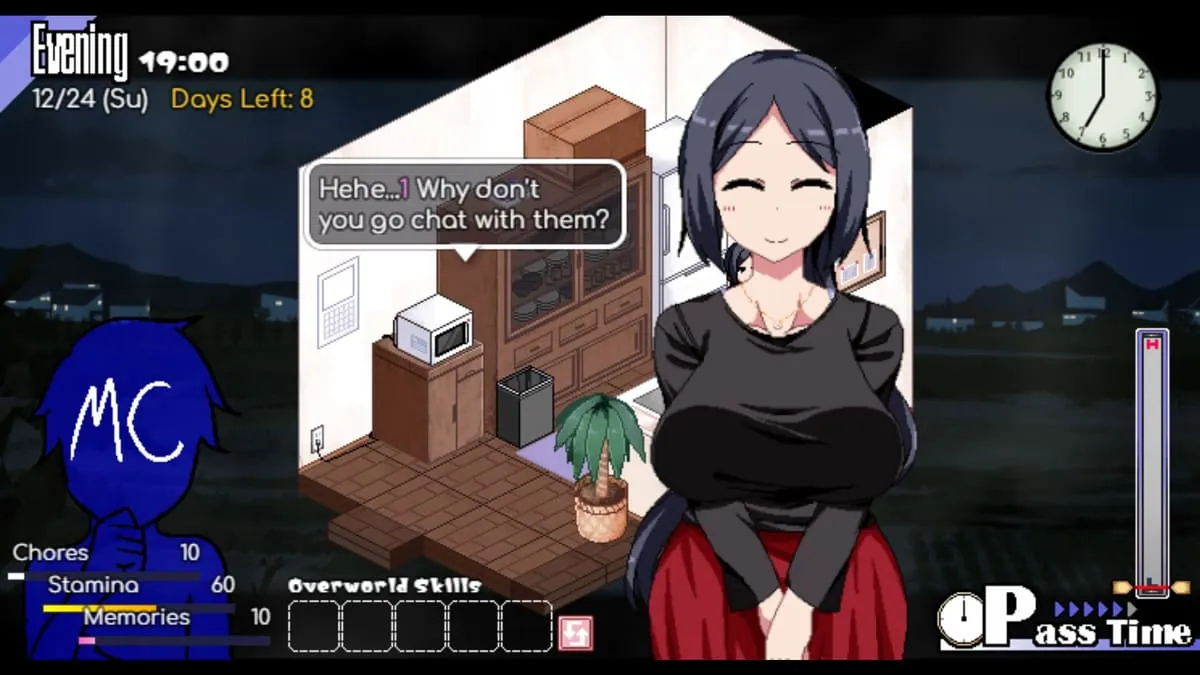
Intertwined Screenshots














Intertwined review
Discover the captivating mechanics and branching paths of Nyx Valeria’s immersive visual novel
Imagine diving into a world where every conversation, every glance, weaves your fate with others in ‘Intertwined.’ This gripping visual novel by Nyx Valeria, now at version 0.12.3, hooks you with its subtle trust-building and timed decisions that ripple through relationships. I remember my first playthrough—helping the florist led to a heartfelt confession, but one wrong choice shattered it all. If you’re wondering how ‘Intertwined’ gameplay mechanics truly shine, this guide uncovers the choice webs, character dynamics, and secrets that make it unforgettable. Get ready to shape your own tangled story.
What Makes Intertwined Gameplay So Addictive?
I still remember the moment my heart sank. I was deep into a late-night session with Nyx Valeria’s Intertwined gameplay, trying to mend fences with a character after a silly argument. A simple, timed prompt appeared: “Apologize sincerely?” I had ten seconds. I panicked, fumbled, and the clock ran out. Silence. 😬 I thought, “No big deal, I’ll just explain next time.” Oh, how wrong I was. That single lapse didn’t just stall our reconciliation; it convinced another character, who overheard the whole awkward silence, that I was dismissive and cold. Two relationship threads, frayed by one failed click. It was a brutal and brilliant lesson in how the Intertwined gameplay mechanics don’t just tell a story—they simulate the fragile, ripple-effect nature of life itself. This isn’t a game you just play; it’s a world you inhabit, where every second and every syllable can twist your path.
This level of depth is what makes learning how to play Intertwined such a rewarding challenge. You’re not just picking from pre-written destinies; you’re navigating a living, reactive system. So, what are the gears turning behind this captivating experience? Let’s pull back the curtain.
How Do Timed Choices and Trust Tiers Work in Intertwined?
At the core of the Intertwined gameplay feel are two pillars: pressure and proof. The Intertwined timed choices are your pressure cooker. These aren’t just for dramatic, life-or-death moments. Sometimes, they’re for quiet, human interactions—a quick compliment, a decision to intervene in a subtle argument, or that apology I botched. The ticking clock forces you to act on gut instinct, mirroring real social dynamics where overthinking can be as damaging as a wrong choice. You learn to read the room fast.
But your instincts need to be informed, and that’s where Intertwined trust tiers come in. Think of trust not as a single bar to fill, but as a series of locked doors. 🚪 Each character has their own tiered system. Let’s say there’s a reclusive florist in the town square. Helping her carry boxes once might get you a polite thank you (Tier 0). Doing it a second time, and maybe choosing a dialogue option that shows you remember her favorite flower, nudges you to Tier 1—she starts sharing minor gossip. Help her a third time, and consistently choose kind, patient responses, and you may hit Tier 2. Now, she reveals a crucial truth about the town’s history that alters your understanding of the main plot.
Conversely, ignore her requests or choose brusque replies, and you might not just stall progress; you could actively lower your tier, locking you into paths where she deliberately misleads you later. The game remembers everything, turning every minor interaction into a potential long-term investment or liability.
To help visualize these core systems, here’s a breakdown of how they function together:
| Mechanic | Function | Player Impact |
|---|---|---|
| Branching Dialogues | Offers multiple response options that reflect different tones (Kind, Sarcastic, Logical, etc.). | Directly influences character affinity and unlocks specific future dialogue branches. |
| Timed Choices | Presents decisions with a 10-15 second limit to respond. | Encourages instinctive play; failing to choose often has a negative consequence, simulating social pressure. |
| Emotion Radar | A subtle visual/audio cue (like a character’s posture or a shift in music) hinting at their current mood. | Allows players to predict reactions and tailor choices, adding a layer of strategic observation. |
| Time Skips | Narrative jumps (e.g., “Two weeks later…”) where past choices are summarized and their consequences realized. | Delivers the payoff or fallout of earlier decisions, often changing the game’s social landscape dramatically. |
Mastering the dance between timed reactions and consistent behavior is key. Here’s my practical advice for handling these moments:
* Don’t freeze! A rushed but genuine choice is almost always better than no choice. The game interprets hesitation as ambivalence.
* Listen to the audio. 🎧 Voice tone and background sounds often carry clues the text alone doesn’t.
* Your first playthrough is for feeling. Don’t save-scum every timed choice. Live with the consequences—it creates a more authentic, personal story.
* Map character priorities. Note which characters value honesty over humor, or action over comfort. This helps you make faster, more effective timed decisions.
* Watch the environment. Sometimes, the “right” choice is hinted at by an object in the scene or a character’s glance.
Unlocking the Relationship Webs in Intertwined
If trust tiers are the vertical depth, then the Intertwined relationship webs are the sprawling horizontal connections. This is the mechanic that truly justifies the game’s name. Accessed from the menu, this visual tool looks like an intricate spiderweb, with your avatar at the center and lines connecting to every major character. But here’s the genius part: those characters are also connected to each other.
You see a thick, bright line between you and Character A. Great! But you also see a thin, jagged line between Character A and Character B. That represents their strained friendship. Your actions with A directly affect that connecting line. Maybe by confiding in you, A becomes more distant from B. Or perhaps by mediating a dispute, you can strengthen that external bond, which later makes both characters more loyal to you. It’s a constant, visual reminder that you’re not managing isolated relationships, but an entire social ecosystem. 🕸️
I had my biggest “whoa” moment with this system. I chose to skip a minor character’s funeral to pursue a clue with my main love interest. In most games, that would just mean missing a sad scene. In Intertwined, the Intertwined relationship webs showed the catastrophic ripple. The deceased’s friends (who I barely knew) developed a deep resentment toward me. That resentment influenced their friends, making whole social circles cold and uncooperative. It created unexpected alliances against me and closed off entire subplots. The consequence felt authentically human, not just punitive.
Mastering Memory Fragments for Hidden Paths
So, you’ve managed the timed pressure, built trust, and navigated the social web. Is that all? Not even close. For the true completionists and lore hunters, the game weaves in one of its most intriguing Intertwined gameplay mechanics: Memory Fragments. 🧩
What are memory fragments in Intertwined? They are collectible, shimmering echoes of past events hidden in specific scenes. They might be a lingering scent in the old library, a half-heard melody in the rain, or a distorted reflection in a window. Clicking on them doesn’t just give you a journal entry; it actively patches a piece of history back into your character’s—or another character’s—consciousness.
Their practical use is profound. Collecting a set of fragments related to a specific event can unlock entirely new dialogue options, ones that shouldn’t logically be available. You can suddenly reference a forgotten promise or confront someone with a truth they thought was buried. This can bypass entire sections of trust-tier grinding or open hidden paths that radically alter a character’s route. Finding them requires obsessive exploration, revisiting locations at different times, and often making choices that put you in a vulnerable or contemplative emotional state where these “echoes” become perceptible.
This, ultimately, is the addictive loop of how to play Intertwined successfully. The first run is your raw, emotional, mistake-filled journey. The second run is where you wield meta-knowledge: you understand the trust tiers, you watch the relationship webs vibrate with each choice, you hunt for every memory fragment, and you conquer those Intertwined timed choices with confidence. The Intertwined gameplay doesn’t just offer replayability; it demands it, because you finally understand that every silent moment, every small kindness, and every piece of recovered history is intertwined, binding you to a story that feels uniquely, powerfully yours.
Intertwined masterfully blends subtle choices, deep characters, and branching narratives into an experience that’s as personal as it is replayable. From trust tiers that build organically to phone interactions that make the world pulse with life, every decision crafts your unique tale. My journeys through Layla’s nostalgia or Alexis’s drama left me pondering real-life connections. If you’re craving a visual novel where your gut instincts shape mature, emotional stories, dive into Intertwined today. Grab headphones, start a new save, and let the webs pull you in—what path will you weave next?