
A Summer’s End – Hong Kong, 1986
Play A Summer’s End – Hong Kong, 1986
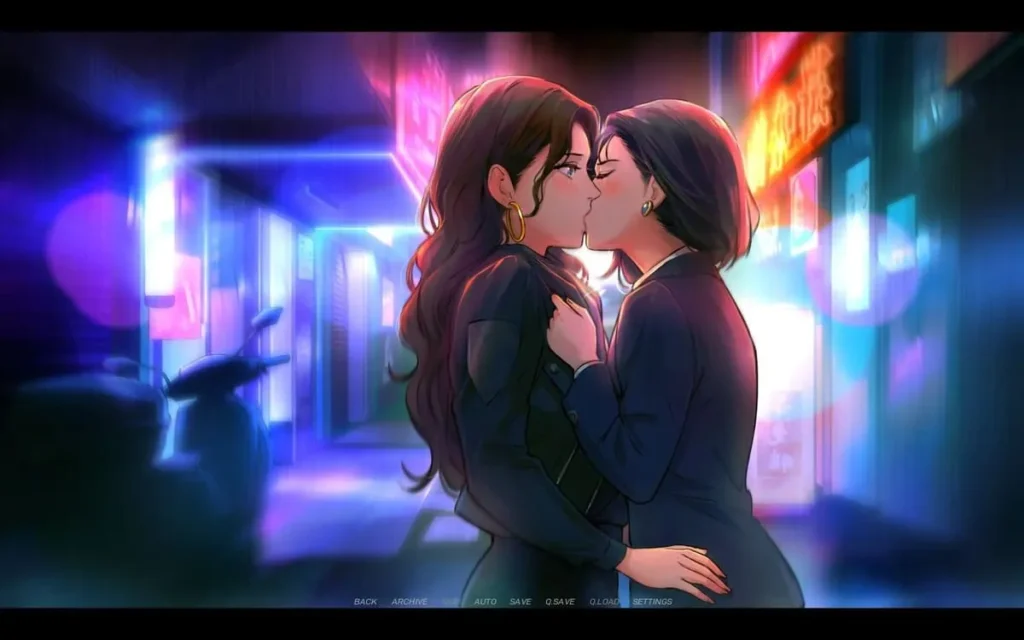
A Summer’s End – Hong Kong, 1986 Screenshots







A Summer’s End – Hong Kong, 1986 review
Exploring the romantic visual novel’s intimacy, themes, and expectations around explicit content
A Summer’s End – Hong Kong, 1986 is often discovered by people searching for an adult-oriented romance game, only to find something very different from a purely explicit experience. Instead of focusing on graphic scenes, this visual novel centers on Michelle and Sam, two women whose relationship unfolds against the neon glow of 1980s Hong Kong. In this article, I’ll walk you through how A Summer’s End – Hong Kong, 1986 really handles intimacy, what kind of mature content it includes, and why many players come away seeing it less as a graphic adult title and more as a heartfelt queer love story.
What Is A Summer’s End – Hong Kong, 1986 Really About?
Let’s be honest—sometimes you stumble upon a game title, see a few screenshots, and your mind starts filling in the blanks. 🌆 If you’ve found yourself searching for “A Summer’s End – Hong Kong, 1986,” you might have arrived with a certain set of expectations. Maybe you were curious about its adult rating or heard whispers about its content.
But here’s the beautiful truth: at its heart, A Summer’s End game story is about something far more profound than physical intimacy. It’s a poignant, beautifully crafted queer love story game that uses its specific time and place to tell a universal tale of connection and self-discovery. Let’s pull back the neon-lit curtain and see what this visual novel is really about.
Who are Michelle and Sam, and how does their story begin?
Meet Michelle. She’s a young office worker navigating the bustling, demanding world of 1986 Hong Kong. Her life is a cycle of work, family duty, and quiet compliance—a predictable rhythm defined by societal expectations. She wears her professional attire like armor, and her future seems neatly, if somberly, mapped out. 🏙️
Then, like a splash of vibrant color on a grey canvas, Sam enters the picture. Confident, free-spirited, and running her own video rental store, Sam represents everything Michelle’s orderly life is not. She’s a breath of fresh air in a city thick with humidity and tradition.
Their meeting isn’t a grand cinematic moment, but a simple, chance encounter. This deliberate choice by the developers is your first clue about the game’s focus. The Michelle and Sam relationship isn’t born from instant passion, but from slow, tentative curiosity. Their early conversations are a delicate dance—Michelle’s reserved nature bumping against Sam’s open charm.
I remember my first playthrough. I was waiting for a certain “type” of scene to hurry up and happen. Instead, I found myself completely disarmed, leaning forward to read every line of dialogue, genuinely invested in whether Michelle would open up or retreat into her shell. The game had me in its grip, and it wasn’t using the tools I expected.
The core of this A Summer’s End visual novel is the slow, authentic build of their bond. You’ll make choices that shape their conversations, influencing Michelle’s confidence and the direction of their friendship. The romance unfolds in shared moments: a quiet drink after work, a vulnerable confession, the gentle offering of support. It’s a story about two people finding a safe harbor in each other, and that emotional intimacy is the game’s true engine.
Is A Summer’s End – Hong Kong, 1986 meant to be an explicit game?
This is the big question, right? Let’s address it directly. Is A Summer’s End explicit? The short and most important answer is: no, not in its primary design or intention.
A Summer’s End – Hong Kong, 1986 is, first and foremost, a romantic visual novel with a strong narrative focus. Its primary goal is to tell a compelling love story, not to provide graphic content. Think of it as a tender, novel-length film where you guide the protagonist’s choices. The game is rated “Adult” on platforms like Steam, but this is largely due to the availability of an optional adult content patch released separately by the developers.
Here’s the practical breakdown:
| Base Game Experience | With Optional Adult Patch |
|---|---|
| A complete, fully functional story from start to finish. | Adds a small number of intimate scenes (reportedly 2-3). |
| Focus is on emotional intimacy, dialogue, and character growth. | Scenes are extensions of the established emotional relationship. |
| All romantic payoffs and relationship conclusions are present and satisfying. | Does not alter the core plot, choices, or ending. |
The key takeaway? The A Summer’s End game story stands powerfully on its own. The developers, Oracle & Bone, have been clear that they created a story-driven experience about queer love and identity. The optional content is just that—optional. It exists for players who want that specific depiction, but it is not the point of the journey.
To miss the rich narrative of A Summer’s End – Hong Kong, 1986 because you’re waiting for or expecting a primarily explicit experience is to miss its soul. The most memorable and impactful moments come from a meaningful glance, a held hand, or a hard-won, vulnerable conversation. 💖
Why the 1980s Hong Kong setting matters to the romance
This isn’t just a pretty backdrop. The choice of 1986 Hong Kong is a masterstroke that deeply informs every aspect of the Michelle and Sam relationship. It’s far more than retro aesthetics; it’s the silent third character in their love story.
The era crackles with a specific tension. Hong Kong is a vibrant, fast-paced metropolis on the cusp of massive change, yet it remains deeply rooted in traditional Chinese values. This duality mirrors Michelle’s internal conflict perfectly. The neon-drenched streets, the city-pop inspired soundtrack, the fashion—it all creates a world that feels both exhilarating and constricting.
- Tradition vs. Modernity: Michelle’s struggle with family expectations and her own desires is reflected in the city’s own identity crisis. Can she break from the path laid out for her, just as Hong Kong itself is navigating an uncertain future?
- Atmosphere as Emotion: The rainy streets, the crowded markets, the quiet, intimate spaces of Sam’s apartment—the game’s stunning art direction uses the setting to evoke mood. A shared cab ride through glittering nightscapes becomes a metaphor for their escaping world.
- A Grounded World: This isn’t a fantasy. The palpable realism of the setting makes the queer love story game feel urgent and genuine. The challenges Michelle and Sam face—from societal judgment to personal fear—feel rooted in a real time and place, making their connection all the more courageous and precious.
Playing this 1980s Hong Kong romance game is like stepping into a meticulously crafted memory. The setting does the heavy lifting, allowing the personal story of two women to feel epic in its intimacy. It’s a love letter to a specific moment in time, and that love bleeds into every pixel of the romance at its center.
So, let’s reframe those expectations. Understanding what A Summer’s End – Hong Kong, 1986 is really about is the key to appreciating it. It’s an invitation to slow down, to invest in two beautifully written characters, and to experience a romance that earns every heartfelt moment. It’s a testament to the fact that the most powerful connections are often built not in moments of passion, but in spaces of quiet understanding.
FAQ: Setting the Record Straight
| Question | Honest Answer |
|---|---|
| What genre is this game? | It is a romantic visual novel with interactive dialogue choices. The core gameplay is reading and making decisions that affect the relationship and story. |
| Is it mainly an explicit game? | No. Its primary design and narrative focus is on emotional storytelling and character development. It is not “designed around” explicit content. |
| Does the story stand without the adult patch? | Absolutely, 100%. The base game contains the complete, emotionally satisfying A Summer’s End game story. The patch adds optional scenes but is not necessary for plot or emotional payoff. |
A Summer’s End – Hong Kong, 1986 is often misunderstood by people who come to it expecting a purely explicit adult game, only to find a carefully written queer romance with a strong sense of time and place. Its focus is on Michelle and Sam’s emotional journey, the push and pull between duty and desire, and the challenges of living authentically in 1980s Hong Kong. While there is optional mature content, it exists to deepen their bond rather than overshadow the narrative. If you approach A Summer’s End – Hong Kong, 1986 as a heartfelt visual novel about love, identity, and change, you are far more likely to appreciate what makes it memorable.